
Autora: Ana Raika, DDS.
Amid the swirling, confusing, unfocused energies of the modern world, there is a light, a calm, and a healing in the center of all things
– Yogi Bhajan
Summary
This paper aims to report on a small exploratory study to investigate the effects of gong sound therapy on persistent symptoms of Lyme disease. A total of six individuals participated, all of whom were experiencing longterm symptoms following Lyme infection, including fatigue, pain, insomnia, brain fog, anxiety, and generalized stress. The participants received four gong sound therapy sessions in weekly intervals. The sound therapy consisted of 1.5-hour sessions incorporating a variety of acoustic instruments. These included a 24-inch symphonic gong tuned to the note A#, three Alchemy Crystal Tone singing bowls, two Shanti bells, a 16-inch ocean drum, and pre-recorded gong tracks played daily at home at the participant’s discretion. Tracks provided by Vikrampal at the Botiquín de Sonido YouTube channel. The intention was to create a deeply immersive sound environment designed to support relaxation and nervous system regulation and observe any symptom relief. Throughout the sessions, the majority of participants reported noticeable improvements. Commonly cited benefits included a mild reduction in physical pain, better sleep, improved mood, improved mental clarity, and more energy during the day. While the study was small and informal, the qualitative feedback strongly suggested that sound therapy may offer meaningful relief for those coping with chronic Lyme-related symptoms. This initial exploration supports the potential value of sound therapy as a complementary healing modality and encourages future research with larger groups and more structured outcome measures.
Keywords: Sound Therapy, Lyme disease, Gong, Calmness, Therapy, Brainwave entrainment, stress reduction, vibration, resonance, quantum physics, biology,
Abstracto
Este artículo tiene como objetivo informar sobre un pequeño estudio exploratorio para investigar los efectos de la terapia de sonido en síntomas persistentes de la enfermedad de Lyme. Participaron un total de seis personas, todas con síntomas a largo plazo tras haber contraído Lyme, incluyendo fatiga, dolor, insomnio, confusión mental, ansiedad y estrés generalizado. Los participantes recibieron cuatro sesiones de terapia de sonido con un intervalo de una semana entre cada una. La terapia consistió en sesiones de 1.5 horas que incorporaban una variedad de instrumentos acústicos. Estos incluían un gong sinfónico de 24 pulgadas afinado en la nota La sostenido, tres cuencos cantores de cristal Alchemy Crystal Tone, dos campanas Shanti, un tambor oceánico de 16 pulgadas, y pistas de gong pregrabadas que los participantes podían escuchar en casa a su discreción. Las pistas fueron proporcionadas por Vikrampal en el canal de YouTube Botiquín de Sonido. La intención era crear un entorno sonoro profundamente inmersivo diseñado para fomentar la relajación, regular el sistema nervioso y observar cualquier alivio de los síntomas. A lo largo de las sesiones, la mayoría de los participantes reportaron mejoras notables. Los beneficios más comúnmente mencionados incluyeron una leve reducción del dolor físico, mejor calidad del sueño, mejor estado de ánimo, mayor claridad mental y más energía durante el día. Aunque el estudio fue pequeño e informal, la retroalimentación cualitativa sugiere con fuerza que la terapia de sonido puede ofrecer un alivio significativo a quienes enfrentan síntomas crónicos relacionados con la enfermedad de Lyme. Esta exploración inicial respalda el valor potencial de la terapia de sonido como modalidad complementaria de sanación y alienta futuras investigaciones con grupos más grandes y medidas de resultados más estructuradas.
Palabras clave: Terapia de sonido, enfermedad de Lyme, gong, calma, terapia, arrastre cerebral, reducción de estrés , vibración, resonancia, física cuántica, biología.
INTRODUCTION
Lyme disease is a tick-borne illness caused primarily by the bacterium Borrelia burgdorferi. It is the most commonly reported tickborne illness in the United States, parts of Europe, and some areas of Canada. Even though Lyme disease is typically treated successfully with antibiotics in its early stages, a subset of patients experience lingering long-term symptoms such as fatigue, joint and muscle pain, neurological issues, cognitive difficulties, and other symptoms due to general inflammation. This condition, often referred to as Post-Treatment Lyme Disease Syndrome (PTLDS) (Maksimyan, Syed & Soti, 2021), can persist for months or even years after initial antibiotic treatment and remains poorly understood by the medical community. (CDC)
As conventional treatments often fall short of fully resolving PTLDS symptoms, many individuals turn to complementary and integrative therapies for relief. These approaches typically aim to reduce inflammation, support immune function, improve sleep, and manage stress and pain. Commonly used complementary therapies include acupuncture, which has shown potential for pain relief and nervous system regulation; hyperbaric oxygen chambers to enhance the perfusion of oxygen into tissues and help to reduce bacterial load; infrared sauna therapy for detoxification and to increase circulation—therefore affecting the degree of inflammation—and nutritional supplementation, including probiotics, magnesium, glutathione, essential fatty acids, chelators to flush out toxins and other supplements. (Harowitz,2012).
Patients with chronic Lyme disease symptoms also seek out lifeenhancing practices like Reiki, yoga, meditation, manual therapies like massage, reflexology, and craniosacral therapy, as well as homeopathy and biofeedback. While evidence varies for each of these interventions, many individuals report symptom improvement through personalized approaches using varied modalities.
A lesser-studied modality is sound therapy, a healing practice that uses tonal vibrations and frequencies generated by instruments such as gongs, crystal singing bowls, Tibetan or Himalayan bowls, bells, and recorded tracks of these instruments, as well as recordings of binaural frequencies which influence physical, emotional, and energetic wellbeing. Sound therapy is believed to work through mechanisms of brainwave entrainment and reduction of stress-related physiological responses, all by balancing the parasympathetic/sympathetic nervous system’s response.
There is a growing body of evidence supporting the use of meditative practices, which appear to positively impact inflammation signaling markers and immunological markers as well as improve subjective well-being (Grossman et al, 2004), and sound therapy specifically for conditions such as anxiety, chronic pain, insomnia, stressrelated disorders, and emotional issues such as grief. There is limited research specifically examining its effects on Lyme disease or PTLDS. A small number of studies have explored the use of music and vibrational therapy in related chronic illnesses, suggesting potential benefits in improving mood, reducing pain, and enhancing overall quality of life. (Contreras, 2023) However, rigorous clinical studies focused on Lymerelated symptoms remain unknown.
Given the debilitating nature of chronic Lyme symptoms, the lack of long-lasting effective treatment options, as well as the increase and spread of the illness, there is a clear need for more exploratory research into complementary modalities such as sound therapy. This study seeks to contribute to that emerging conversation by documenting the experiences of a small group of individuals with Lyme disease who participated in immersive sound therapy sessions.
While the study is modest in scale, its findings may offer valuable insight into the therapeutic potential of sound as a supportive option for those living with chronic Lyme-related life disruptions. It was noted by Maksimyan et al that patients with chronic Lyme are more likely to miss work and have less family and social interactions due to the debilitating nature of the disease than sufferers of other chronic illnesses.
4. OBJECTIVES
4.1. General Objective
To explore the potential of the acoustic properties of gong sounds and other instruments in the management of Lyme disease symptoms.
4.2. Specific Objectives
a) To observe if sound therapy sessions have a positive effect on chronic symptoms in Lyme disease patients
b) To explore the benefits of sound therapy as a positive/additive effect during multiple sessions in this subset of patients
c) To create awareness of sound therapy as a complementary therapy option for patients with residual Lyme disease symptoms.
5. Theoretical Framework
The theoretical framework for this research investigates the potential impact of sound therapy, specifically utilizing gongs and singing bowls, on the symptoms experienced by individuals with Lyme disease. It was estimated that between 2010 to 2018, there was an average of 476,000 LD diagnoses per year in the United States alone. Given the complex and often persistent nature of Lyme disease symptoms, even after antibiotic treatment, there is a growing interest in complementary and alternative therapies. This framework will first delineate the current understanding of Lyme disease, including its etiology, prevalence, and the challenges associated with its diagnosis and treatment. Subsequently, it will delve into the burgeoning field of sound therapy, exploring its historical applications, the neuroscience underpinning its proposed mechanisms of action—particularly regarding brainwave entrainment—and the specific properties of instruments like the gong and singing bowls. The integration of these two areas aims to establish a theoretical basis for how the vibrational and auditory stimuli of sound therapy might modulate physiological and psychological states, thereby potentially alleviating the chronic symptoms associated with Lyme disease.
5.1 What is Lyme disease
Lyme disease is an infectious disease caused by the bacterium Borrelia burgdorferi (and rarely Borrelia Mayonii), transmitted to humans through the bite of infected ticks (also called deer ticks or lone star ticks). It primarily affects the skin, nervous system, joints, and heart. The transmission mode of Lyme disease involves a vector, which is an organism that carries the disease from one subject to another. The primary vector in Lyme disease is the black-legged tick (Ixodes scapularis in the eastern U.S. and Ixodes pacificus in the western U.S.) (Skar, Blum, & Simonsen, 2024).
The usual transmission process involves a tick becoming infected by feeding on infected animals (usually small mammals like mice), and then the disease is transmitted to humans when infected ticks bite and remain attached for 36–48 hours or more.
Most cases occur in late spring through early fall, when ticks are most active and people are more likely to explore the wilderness. Lyme disease impacts certain populations at higher risk, which include:
- People living or spending time in wooded or grassy areas, especially in regions like the Northeastern, Mid-Atlantic, and North-Central U.S.
- Campers, hikers, hunters, and outdoor workers (e.g., park rangers, landscapers).
- Children and older adults, who may be less likely to notice or remove ticks promptly.
5.2 Symptoms, Treatment, and Prevention
Symptoms occur in stages and as such it can lie dormant in your body for several years before being suddenly triggered by stress or another illness (Oasis Medical Institute).
The early stage is in the first 3 to 30 days after the tick bite, which predominantly shows a red rash that expands in the shape of a bull’s eye. This rash is called Erythema Migrans. The rash is accompanied by fever, chills, and fatigue. Muscle and joint pain, and also headaches.
The second stage, called the Early Disseminated Stage, is characterized by multiple erythema migrans rashes, facial palsy, meningitis, heart palpitations, and inflammation.
The third and last stage, which can last from months to years, is characterized by chronic arthritis, especially in large joints like knees, elbows, and hips. And neurological symptoms like brain fog and neuropathy. (Global Lyme Alliance).
Treatment
Early diagnosis and treatment are critical of Lyme disease are critical to decrease the probability of chronic symptoms developing. The standard antibiotic is doxycycline for adults and children over 8 years of age. Amoxicillin for pregnant women and younger children. Depending on the stage and severity of the symptoms, the antibiotic course can last from 10 to 21 days. Late-stage Lyme disease may require a longer course of the use of intravenous antibiotic therapy. (NIH,2022).
Prevention and Eradication Mechanisms
Due to the impact Lyme disease has on the susceptible population, several prevention protocols can help prevent the spread, including: Wearing long sleeves/pants when in tick-prone areas, especially during the months of higher tick population. Using insect repellents with DEET, picaridin, or permethrin (although the use of these chemicals has a risk of toxicity). Performing full-body tick checks after being outdoors, especially underarms and groin areas. Showering soon after being outdoors helps wash off unattached ticks, and ensuring house pets, especially dogs, are under the care of a veterinarian and take the appropriate anti-tick medication.
Environmental tick control and public health measures suggestions:
- Clear leaf litter, tall grasses, and brush from yards, and use wood chips or gravel to separate lawns from wooded areas, thus creating a barrier.
- Establish tick surveillance and control programs as well as public education campaigns about tick awareness and protection in schools in high-risk areas. Currently, there is no vaccine for Lyme disease. A human Lyme disease vaccine (VLA15 by Valneva and Pfizer) is currently in stage 3 of clinical trials (CDC, 2024).
Incidence of Lyme Disease
The CDC receives about 30,000–35,000 confirmed cases per year. However, actual infections are underreported. The CDC estimates the true number of infections is ~476,000 per year. With a U.S. population of ~333 million and about 476,000 reported infections/year ≈ , 0.14% of the population gets infected per year. It is also assumed that there is a high number of unreported cases per year. Due to the growing number of cases and the increased chronicity of the disease, many patients look beyond conventional protocols to manage their diagnosis. Studies such as those by Chanda and Levitin (2013) show that music can directly influence the limbic system, reducing anxiety and physiological stress. Music and sound affect heart rate variability (HRV), promote the release of dopamine, and facilitate states of deep relaxation; all of which are highly beneficial to this population.
5.3 The Neuroscience of Sound Therapy
Although music therapy has been utilized in clinical settings scientific research into the neurochemical effects of music/sound is still in its infant states (Chanda & Levitin, 2013).
The following is a description of the different wavelengths experienced by our brains as we move our awareness inwards. Resulting in our internal world being more present than the outer world.
- Gamma waves (30–100 Hz): During this stage, the brain appears hyperexcited, but at the same time, not at risk. Where the internal world appears more real than the outside world. Also known as a superconscious state.
- Beta waves (13–30 Hz): Represent a state of alertness, focused attention, and active processing. They are common during problemsolving and tasks that require logic and reasoning. During this stage, the brain is aware of the body and of time. Integrating all the information perceived.
- Alpha waves (8–13 Hz): These predominate in calm states, when the eyes are closed, or when entering a state of tranquil relaxation. This rhythm facilitates the integration of mind and body. These wavelengths allow us to enter the subconscious mind and move away from our analytical mind.
- Theta waves (4–8 Hz): This is a very hypnotic state, and the brain is highly suggestible. These wavelengths are observed during deep meditation and creative processes.
- Delta waves (1–4 Hz): These are the slowest waves and are present during deep, dreamless sleep. They are related to cellular regeneration, well-being, internal peace, intuition, and empathy (Vikrampal, formación terapia de sonido, 2025).
In contrast to being static, these brainwave oscillations are adaptable and responsive to environmental signals like sound. The foundation of soundbased therapy, especially the usage of gongs, is the nervous system’s capacity to synchronize with external frequencies via the entrainment process. As a result, the gong’s harmonic and rich frequencies may gradually facilitate a change from beta (alert and stressed) waves to alpha, theta, or delta states, allowing for profound relaxation, emotional integration, and physical regeneration. Recent studies in neuroscience and music therapy have backed up this idea of neuroelectrical resonance, which posits that sound is not merely felt but rather that it is also modulated. It’s not only about hearing; it’s about feeling and integrating at the cellular level the vibrations of what we hear. The gong’s capacity to create a broad spectrum of harmonic frequencies, including those in the theta and alpha ranges (8–13 Hz), facilitates neuronal synchronization in the brain, which in turn fosters a sense of calm, mental clarity, and decreased emotional stress. Additionally, the resonance of sound waves has a somatic effect, helping to release muscular tension and encouraging deeper, more mindful breathing (Goldsby et al., 2017). The frequencies and vibrations emitted by sound therapy instruments, especially the gong can influence the listener’s neuronal activity through this synchronization process, called entrainment, which makes it easier to shift from a state of alertness (beta waves) to a state of calm (alpha, delta, theta).
Pesek and Bratina (2016) emphasize that gongs’ complex overtones create multidimensional therapeutic effects, influencing both body and mind through resonant vibrations that restore physiological harmony.
In a publication of the NIH Library of Medicine, it was noted that “merely lying down and listening to the high-intensity, low-frequency combination of singing bowls, gongs, and bells in a sound meditation could induce a deep relaxation response and positively affect mood and sense of well-being” (Goldsby, Goldsby, McWalters, & Mills, 2016). The gong, an ancient percussion instrument, emits harmonic frequencies that resonate in the body and stimulate the autonomic nervous system, promoting relaxation responses. The lowfrequency vibrations and even infrasound generated by this instrument promote muscle relaxation and activation of the parasympathetic nervous system (Vikrampal, 2024).
A clinical case study showed that a lupus patient treated with gong therapy experienced significant relief in somatic pain and emotional distress, suggesting applicability to chronic inflammatory conditions such as Lyme disease (Roche González, 2025).
Similarly, adults undergoing gong therapy to reduce workplace stress showed measurable reductions in perceived stress and improvements in emotional resilience, supporting the use of gong therapy for stress modulation (Matiasevich, 2025).
In the book The Healing Power of Sound, Dr. Gaynor quotes Sufi master Hazrat Inayat Khan:
“The physical effect of sound has also a great influence upon the human body. The whole mechanism, the muscles, the blood circulation, and the nerves are all moved by the power of vibration. As every sound is resonant, so the human body is a living resonator for sound” (Gaynor, 2002).
The five pillars of sound therapy (a summary based on Vikrampal Singh’s teachings.
1. Resonance
‘The principle of resonance affirms that a harmonic and healthy vibration is contagious towards a disharmonious and weak vibration (Vikrampal Singh,
2025)
Holistic resonance is an acoustic phenomenon generated by the gong, resulting from the impact of its harmonic tones on the body and mind. According to Don Conreaux, this resonance creates «music that is heard by the soul,» facilitating a sonic space that allows for a journey into non-material dimensions. In his work, Magnus Opus of the Gong, Conreaux states that: “The spiritual power of the holistic resonance of the gong has the power to dissolve the density of the mind’s problematic thoughts in the brain of every existential ego.”
In this magisterial body of work, Conreaux also states that “Gong tones add together and subtract to create a fullness of sound called functional harmony. The mathematics involved is the Fibonacci Series. In music, it is the Resultant Tone Theory. In quantum physics, it is the Chaos Theory of Quasiperiodic patterns and 3-dimensional Hologramic Fractalization. Thus giving us a glimpse into the complexity of this instrument, which science has yet to fully understand.”
2. Brain entrainment principle
The entertainment phenomenon refers to the ability of two dissimilar oscillating frequencies to eventually reach a similar oscillation. Brain waves can synchronize with external rhythmic stimuli, including the frequencies emitted by the gong. This principle allows states of deep relaxation and neurophysiological balance, affecting the various branches of our nervous system.
Consequently, it causes the synchronization of breathing patterns, heartbeat, and brain waves, thus harnessing the therapeutic power of sound. According to Deepak Chopra, the body is held by sound, and the presence of disease indicates that some sounds have gone out of tune.
3. Intention
According to Dr. Joe Dispenza, and as explained in his book Becoming Supernatural, the formula to creating an abundance of health, wealth, or anything prosperous in life lies in what he calls “The Formula”. A clear intention and an elevated emotion. The clarity of intention of both the therapist and the recipient is an essential component of the healing process. (Dispenza,2017).
4. Musicality
Sound therapy incorporates elements of music, which include rhythm, melody, harmony, and undertones. Obeying these elements allows the sessions to be designed purposefully to achieve the desired effect.
5. The Voice
In sound therapy, the human voice is considered the most powerful instrument. The voice is used to bring presence to the mind/body connection and to elevate the state of being of those listening, both at the beginning and the end of the session. The human voice can also be used by singing mantras, which are powerful sound currents that also entrain the human brain. Mantras are commonly used in practices such as Kundalini yoga and are” a core precept of this tradition holds that song is a sacred prescription, a means to calm the mind and senses to achieve a deeper spiritual awareness”. (Gaynor, 2002).
5.4 Legal Framework
This study, which explores the effects of gong therapy as a complementary modality, is not intended to diagnose, treat, or cure any medical condition and does not constitute conventional medical treatment. Under Virginia law, only licensed professionals may practice medicine or make diagnostic or curative claims (Va. Code Ann. § 54.1-2900 et seq.). Sound therapy practitioners are not recognized as licensed health care providers and typically operate under voluntary certification through private institutions, not federal or state licensure. As such, this modality is legally considered a complementary or alternative practice aimed at promoting general wellness, reducing stress, or supporting conventional care, not replacing it. Virginia law (Va. Code Ann. § 54.1-2957) prohibits unlicensed individuals from presenting their services as medical treatment and requires that clients be informed of the non-medical nature of such practices. All claims must remain within the bounds of lawfully permitted wellness assertions—such as promoting relaxation or reducing stress—and must avoid any statements suggesting the ability to treat or cure disease, as these would violate both Virginia’s Consumer Protection Act (Va. Code Ann. § 59.1-196 et seq.) and federal advertising regulations (15 U.S.C. §§ 41–58). Informed consent is essential, and practitioners are expected to communicate the scientific limitations, risks, and intended purpose of sound therapy. Additionally, any collection of protected health information must comply with HIPAA regulations where applicable (45 C.F.R. Parts 160 & 164).
6. METHODOLOGY
6.1 Experimental Design
This was a longitudinal study during which quantitative and descriptive data were collected by using a Likert-type scale (BENEFITS OF GONG VIKRAMPAL V22-010) to analyze the participants’ progress during the set time.
Instrumentation:
- 24-inch Paiste Symphonic gong tuned to A# and 442Hz
- Three “Alchemy Crystal Tone” singing bowls tuned to C(528 Hz), D(594 Hz), E (660 Hz)
- Two Shanti bells (Blue Moon and Fire)
- A 16-inch diameter Ocean Drum
Each session lasted approximately 75 minutes and was structured in three stages. The first part (10 minutes) included a brief guided meditation with the voice accompanying the sounds of “Crystal Tone Alchemy” quartz crystal bowls and the ocean drum, intended to prepare the group for the sound experience. The second part, with a duration of 45 minutes, constituted the core of the session and was based on the emission of frequencies produced by a 24″ symphonic Paiste gong tuned to A note. These instruments were used to induce low-frequency cerebral states by stimulating frequencies rich in harmonics and slow rhythms, conducive to a deep state of relaxation.
Finally, the closing stage (10 minutes) included silence for the integration of the experience, followed by a smooth and harmonious sound accompaniment using Koshi bells, facilitating a gradual and contained return to the waking state.
6.2 Participants
The study took place during four sessions given at weekly intervals.
There were six participants: five women and one male, ranging in age from 40–75 years. The only inclusion criteria noted were that all participants had a medical diagnosis of Lyme disease. There was no exclusion criterion. All participants were residents of the state of Virginia. The participants were given several forms to complete, including a consent form, an authorization form clearly stating the HIPAA law release according to 45 CFR § 164.508 and Virginia Code § 32.1-162.16 et seq., and a survey detailing the symptoms experienced.
6.3 Research Setting
The sessions were conducted in a quiet space dedicated to energy medicine therapies, including sound therapy sessions (Inphinite Wellness LLC) and located in Midlothian, Virginia. The sessions were conducted from January 15 to February 8, 2025. The participants were advised to come dressed comfortably and well-hydrated.
6.4 Data collection
A translated version of The Vikrampal Gong Benefits Questionnaire V2201, a 0- to 4-point Likert-type questionnaire, was used for data collection. Response options ranged from 0 («not at all») to 4 («extremely»). The questionnaire has been previously validated for a similar population. This instrument was designed to assess the physical and emotional state of the participants. The questionnaire was administered in person, in printed format, twice per session: before and after each of the four sound therapy sessions. Items assessed:
A. General physical condition
- I have energy
- I have pain
- I feel ill
B. Emotional state
- I feel sad
- Stress level
- Anxiety level
6.5 Data Collection Process
The «Gong Vikrampal Benefits V22-01» questionnaire was administered under controlled conditions, immediately before and after each session, allowing for comparable measurements of the immediate subjective impact of the therapy.
The assessments were conducted in person and a quiet space, encouraging a deeper sense of self-observance and honest responses. Each participant previously signed an informed consent form, which detailed the study objectives, the voluntary nature of their participation, and guarantees of data confidentiality.
The study complied with the guidelines of the HIPAA privacy law.
(Virginia Code 32.1-127.1:03) ensuring responsible, ethical, and secure handling of personal information. Specific measures were taken to prevent unauthorized access, misuse, or disclosure of data, safeguarding the rights and privacy of participants at all times.
6.6. Application of Data Collection Tools
Each session included the administration of the questionnaire and a heart rate measurement at two critical points: before the session, to establish a baseline, and at the end of the session to monitor/assess any immediate effects of treatment at the end of each session.
The schedule for the application of sessions is presented below:
- T1: January 18, 2025………before and after questionnaire
- T2: January 25, 2925………before and after questionnaire
- T3: February 1, 2025……….before and after questionnaire
- T4: February 8, 2025………..before and after questionnaire
7. Results
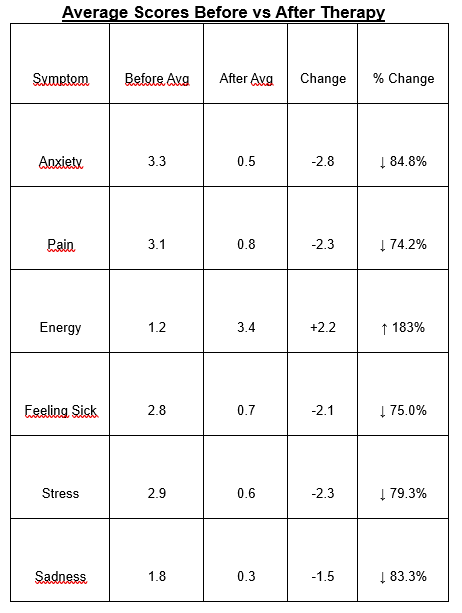
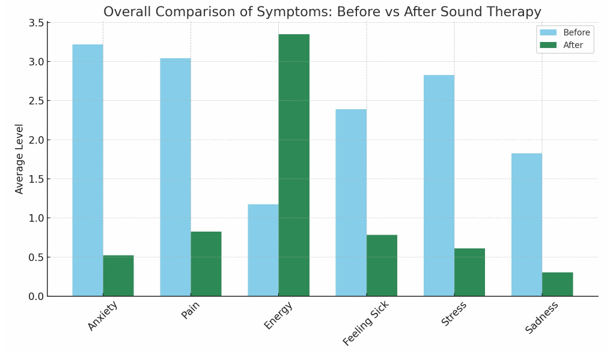 The study evaluated symptom changes across six participants with Lyme disease following four sessions of sound therapy. Participants completed surveys before and after each session, rating six key symptoms on a scale from 0 (none) to 5 (extreme).
8. Discussion and Limitations
The findings of this exploratory study suggest that sound therapy, specifically utilizing gongs and singing bowls, may offer a promising complementary approach for alleviating persistent symptoms in individuals with Lyme disease. The observed significant reductions in self-reported fatigue, pain, sadness, anxiety, and generalized stress, alongside an increase in energy, indicate a potential for systemic benefits. This aligns with theoretical understandings of how specific frequencies and overtones can induce deep relaxation states (Alpha and Theta brainwaves) and promote autonomic balance, which could be particularly beneficial given the inflammatory and neurological aspects of chronic Lyme disease. However, this research is subject to several important limitations that warrant consideration for future studies. Firstly, the extremely small sample size of six participants significantly restricts the generalizability of these findings and precludes robust statistical analysis. Secondly, the absence of a control group (e.g., a placebo group or a standard care group) makes it impossible to definitively attribute the observed improvements solely to the sound therapy, as participant expectation or other confounding factors could play a role. Furthermore, the reliance on self-reported Likert-type scales, while providing valuable subjective insights, lacks objective physiological or clinical measures that could corroborate the reported symptom changes. Future research should aim to address these limitations by conducting larger-scale, randomized controlled trials with diverse participant cohorts, incorporating objective measures such as inflammatory markers, sleep quality assessments, and cognitive function tests. Longitudinal studies with extended intervention periods and follow-up would also be crucial to assess the durability of any therapeutic effects. Additionally, exploring the specific mechanisms through which sound therapy impacts Lyme disease symptoms, perhaps by investigating its effects on the immune system or neurological pathways, could provide deeper insights into its potential as a therapeutic modality.
Potential Mechanisms of Action
1. Brainwave Entrainment
Gong frequencies and overtones are known to entrain the brain into Alpha (8–12 Hz) and Theta (4–8 Hz) states, associated with deep relaxation, emotional processing, and autonomic balance. These states improve parasympathetic tone and may reduce pain perception and stress reactivity.
2. Nervous System Regulation
Sound vibration may support vagal activation, reducing inflammation and improving resilience. The shift away from sympathetic (fight-flight) dominance likely played a role in lowered anxiety, sadness, and stress scores.
3. Energetic and Emotional Release
Many participants described emotional clearing or insights during the sessions. Please refer to some of the participants’ testimonies post-sessions. This aligns with vibrational healing models in which resonant sound helps release stored trauma, especially in fascia, the limbic system, and subtle energetic fields.
4. Holistic Impact
The consistency across physical and emotional domains implies a wholesystem shift — not just symptom suppression, but deep balancing and regulation of body-mind rhythms.
9. Conclusion
Lyme disease is a significant tick-borne illness that can cause long-term health issues if untreated. Prevention through awareness and tick control is key. Early recognition and prompt antibiotic treatment usually lead to full recovery. However, the lingering symptoms, the high stress of a possible misdiagnosis, and the time it takes to receive a diagnosis create a high level of stress in these patients that puts their health at a higher risk. Although there are several complementary therapies to help patients deal with the symptoms, like Reiki, mindfulness, yoga, craniosacral therapy, and others, sound therapy has not been researched for its potential. According to the International Institute of Sound Therapy (IITS), the sound and vibration emitted by the gong penetrate the physical body, positively affecting the brain, changing its waveform, and the mind, facilitating entry into the meditative space at a much deeper level than any other instrument, perhaps lowering the levels of inflammation which are so predominant in Lyme disease.
As observed by the results of this study
- Because of its powerful source of natural harmonic resonance, the gong is able to induce therapeutic effects on the mental, physical, and emotional levels in patients with chronic illnesses like Lyme disease. Participants’ comments (noted in annexes) and the quantitative results support the notion that gong sound therapy positively affects overall wellbeing, providing emotional balance, physical relief, and a sense of inner calm. Improvements in the effects of chronic symptoms like stress, anxiety, and sadness suggest enhanced autonomic regulation, possibly via vagus nerve stimulation or changes in brainwave states. These results align with theories that sound therapy fosters parasympathetic dominance, crucial for healing in chronic illness.
- Line charts showed progressive improvement across sessions, not just immediate post-session relief. This trend indicates that repeated sessions build on prior benefits, implying that gong therapy may offer cumulative, lasting effects on both body and mind. Participants consistently reported increased energy levels post-session, with an overall improvement of over 115% from baseline. This suggests that sound therapy may counteract fatigue, a hallmark symptom in chronic Lyme.
- Although small in scale, this study has created awareness on the potential of gong acoustic sounds on the long term effects on illnesses like Lyme disease. For this reason alone, the effects of the acoustic properties of the gong need a more in-depth investigation. A shimmer of light is much needed in the search for complementary modalities that have been underused and understudied. Further studies may address limitations such as small sample size (n=6), no control group, subjective self-reported scales, and a short time frame.
Bibliography
Web Articles
Global Lyme Alliance. What helps improve cognitive function for Lyme patients? https://www.globallymealliance.org/blog/what-helps-improve-cognitive-functionfor-lyme-patients
Oasis Medical Institute. Sound therapy for Lyme disease. https://oasismedicalinstitute.com/sound-therapy-for-lyme-disease
National Institutes of Health. (2022, February). Understanding how sound suppresses pain. NIH Research Matters. https://www.nih.gov/news-events/nihresearch-matters/understanding-how-sound-suppresses-pain ()
Vikrampal Singh. ¿Qué es un baño de gong y qué beneficios tiene? Instituto Internacional de Terapia de Sonido. https://vikrampal.es/que-es-un-bano-degong-y-que-beneficios-tiene/
Roche González, R. (2025, June 27). Efectos de la terapia de sonido con gong en paciente con lupus eritematoso sistémico. Instituto Internacional de Terapia de Sonido. https://iiterapiadesonido.es/efectos-de-la-terapia-de-sonido-congong-en-paciente-con-lupus-eritematoso-sistemico/
Matiasevich, M. R. (2025, June 20). Efectividad de la terapia con gong para reducir el estrés laboral en adultos. Instituto Internacional de Terapia de Sonido. https://iiterapiadesonido.es/efectividad-terapia-con-gong-para-reducirestres-laboral-en-adultos/
Peer Reviewed Journal Articles & Reviews
Chanda, M. L., & Levitin, D. J. (2013). The neurochemistry of music. Trends in Cognitive Sciences, 17(4), 179–193. https://doi.org/10.1016/j.tics.2013.02.007
Fallon, B. A., Levin, E. S., Schweitzer, P. J., & Hardesty, D. (2010).
Inflammation and central nervous system Lyme disease. Neurobiology of Disease, 37(3), 534–541. https://doi.org/10.1016/j.nbd.2009.11.016
Goldsby, T. L., Goldsby, M. E., McWalters, M., & Mills, P. J. (2017). Effects of singing bowl sound meditation on mood, tension, and well being: An observational study. Journal of Evidence Based Complementary & Alternative Medicine, 22(3), 401–406. https://doi.org/10.1177/2156587216668109
Horowitz, R. I. (2012). Pain management strategies in the chronically ill Lyme disease patient. Medical Hypotheses, 78(5), 666–673.
Maksimyan, S., Syed, M. S., & Soti, V. (2021). Post treatment Lyme disease syndrome: Need for diagnosis and treatment. Cureus, 13(8), exxx. https://doi.org/10.7759/cureus.xxxxx (PMC: PMC8507427) ()
Dispenza, J., & Braden, G. (2017). Becoming supernatural: How common people are doing the uncommon (1st ed.). Hay House, Inc.
Strasheim, C. (2022, July). Solutions for insomnia in Lyme disease and related neuroinflammatory conditions [Manuscript submitted for publication].
Goleman, D., & Davidson, R. J. (2017). Yoga, meditation, and mind body health: Increased BDNF, cortisol awakening response, and altered inflammatory marker expression after a 3 month yoga and meditation retreat. Frontiers in Human Neuroscience, 11, Article 315. https://doi.org/10.3389/fnhum.2017.00315
Pesek, A., & Bratina, T. (2016). Gong and its therapeutic meaning. Muzikološki Zbornik, LII(2), 147–156. https://www.researchgate.net/publication/311631049_Gong_and_Its_Therapeutic_Meaning
Skar, G. L., Blum, M. A., & Simonsen, K. A. (2024). Lyme disease. In StatPearls (2024–2025 ed.). StatPearls Publishing. Retrieved July 15, 2025, from https://www.ncbi.nlm.nih.gov/books/NBK431066/
